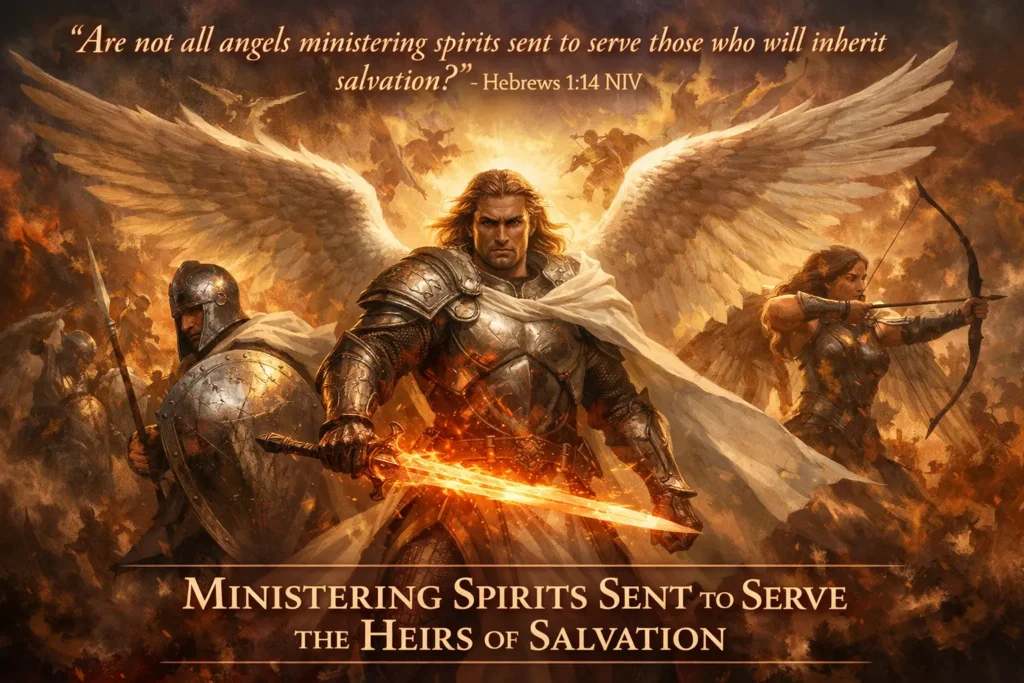
“Are not all angels ministering spirits sent to serve those who will inherit salvation?” — Hebrews 1:14 NIV
Nobody told me angels were warriors.
I grew up with the chubby Renaissance cherubs and the white-gowned harp players on greeting cards. The angels of Christmas pageants — gentle, luminous, non-threatening. You could imagine them floating around a manger without anyone flinching.
That is not the angel of the Bible. Not even close.
Every angelic appearance in Scripture that includes a human response follows the same pattern. The angel appears. The human falls on their face in terror. The angel says — almost always as the first words — ‘Do not be afraid.’ That phrase is not comfort. It is a clinical observation. Whatever just appeared in that room is producing a fear response that requires immediate management.
Biblical angelology is not a soft topic. It is one of the most neglected and most important doctrines in Christian theology.
What Angels Are: The Biblical Definition
The Hebrew word for angel is malak. The Greek is angelos. Both words mean the same thing: messenger. An angel is fundamentally a sent being — a creature dispatched by God to accomplish a specific purpose.
They are not divine. They are not to be worshipped (Colossians 2:18, Revelation 22:8-9). They are created beings — the firstborn of God’s creative work, brought into existence before the physical universe (Job 38:7, where ‘morning stars’ sang at creation). They exist in a dimension that intersects with human experience but is not confined to it.
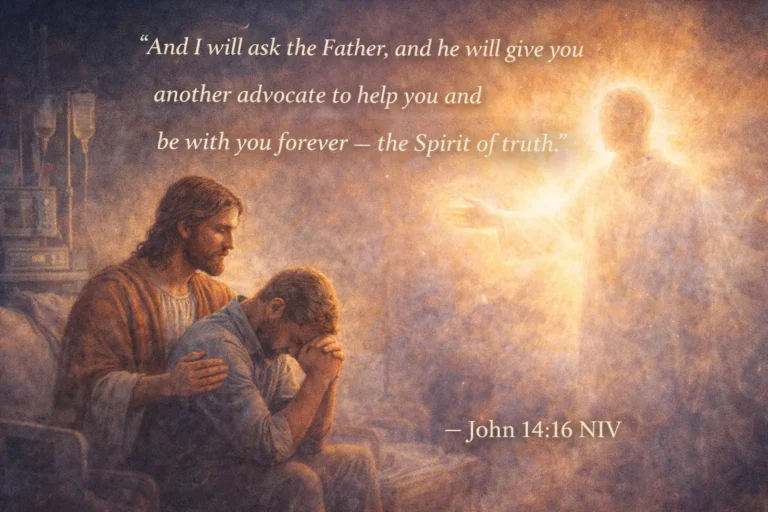
Hebrews 1:14 defines their primary function with precision: ‘ministering spirits sent to serve those who will inherit salvation.’ The word ‘ministering’ is leitourgika — the same root as ‘liturgy,’ service that is formal, ordered, purposeful. Angels do not freelance. They are dispatched.
The Hierarchy: Ranks of Angels in Scripture
Scripture does not provide a complete organizational chart of the angelic realm. But it does name distinct categories, and systematic theologians have worked to organize them from the biblical data.
Seraphim
Isaiah 6:2–3 describes beings called seraphim — from the Hebrew saraph, meaning burning or fiery — positioned above God’s throne, each with six wings. Two wings covered their faces. Two covered their feet. Two were used for flight. Their continuous declaration — ‘Holy, holy, holy is the Lord Almighty’ — was so powerful that the doorposts of the temple shook and the building filled with smoke.
These are not delicate creatures. They are beings of such concentrated holiness that direct exposure to their full form would overwhelm a human observer.
Cherubim
Cherubim appear first in Genesis 3:24, placed east of Eden to guard the way to the Tree of Life with a flaming sword. Ezekiel 1 and 10 provide the most detailed description — four-faced beings (the faces of a man, lion, ox, and eagle), four wings, gleaming like lightning, moving in perfect coordination with the Spirit of God.
The Ark of the Covenant had two golden cherubim fashioned on its lid — not as decoration, but as representations of the actual angelic guardians of God’s throne. These are the angels associated with God’s direct presence and glory.
The Archangels
Scripture explicitly names two archangels. Michael is described as ‘one of the chief princes’ (Daniel 10:13) and ‘the archangel’ (Jude 9) — a warrior figure who contends against demonic powers and will lead the angelic host in the final conflict (Revelation 12:7). Gabriel is the messenger angel — dispatched to Daniel to interpret visions (Daniel 8:16, 9:21), to Zechariah to announce John the Baptist’s birth (Luke 1:19), and to Mary to announce the incarnation (Luke 1:26).
The General Angelic Host
Beyond the named categories, Scripture references an uncountable multitude of angels — ‘thousands upon thousands, and ten thousand times ten thousand’ (Revelation 5:11). Hebrews 12:22 calls this ‘innumerable angels in festal gathering.’ The angelic population is staggering. The idea that you might go through a normal day without being in proximity to any of them is almost certainly wrong.
What Angels Do: Their Functions in Scripture
Angelology is not just a study of what angels are. It is a study of what they do. Scripture identifies a consistent set of functions.
Messengers of God’s Revelation
The most basic angelic function is delivering divine communication. Gabriel to Mary. The angel to Joseph in four separate dreams. The angel to the shepherds at Bethlehem. The angel to Cornelius directing him to Peter (Acts 10:3). In each case, the angel carries specific information from God to a specific person at a specific time. The message is always actionable — it requires a response.
Protectors and Deliverers
Psalm 91:11–12: ‘For he will command his angels concerning you to guard you in all your ways; they will lift you up in their hands, so that you will not strike your foot against a stone.’ The angel who stood between Israel and the Egyptian army at the Red Sea (Exodus 14:19). The angel who shut the mouths of the lions for Daniel (Daniel 6:22). The angel who released Peter from prison (Acts 12:7–10).
Protection is not always visible. The servant of Elisha panicked at the surrounding army until Elisha prayed for his eyes to be opened — and the young man saw the hills full of horses and chariots of fire surrounding them (2 Kings 6:17). The angelic protection was present before it was visible.
Warriors in Spiritual Conflict
Daniel 10:12–13 pulls back the curtain on something that most contemporary Christianity does not discuss: angelic warfare. The angel sent to Daniel in response to his prayer was opposed for twenty-one days by ‘the prince of the Persian kingdom’ — a demonic power — until Michael came to help. Prayer was the catalyst. The battle was real. The delay was explained.
This is not mythology. Paul’s description of the believer’s armor in Ephesians 6:10–18 is grounded in the same reality — ‘our struggle is not against flesh and blood, but against the rulers, against the authorities, against the powers of this dark world and against the spiritual forces of evil in the heavenly realms.’ The angelic dimension is an active theater of conflict.
Ministers at Critical Human Moments
Angels ministered to Jesus after His wilderness temptation (Matthew 4:11). An angel strengthened Him in Gethsemane (Luke 22:43). Angels were present at the resurrection, rolling back the stone and announcing what had happened (Matthew 28:2–7). Angels will accompany Christ at His return (Matthew 25:31).
The pattern across all of these is that angels are present at the hinge points — the moments of maximum spiritual significance. They are not randomly deployed. They are precisely sent.
Angels and Modern Christian Life
The question most people actually want answered is this: are angels still active today?
Hebrews 13:2 says they are — specifically in ways we cannot always detect: ‘Do not forget to show hospitality to strangers, for by so doing some people have shown hospitality to angels without knowing it.’ This is not a metaphor. It is a stated reality.
The doctrine of cessationism — the view that miraculous activity stopped after the apostolic age — does not typically extend to angels. Even cessationists generally affirm that God continues to use angelic beings in His providential governance of history. The difference is primarily in how directly and dramatically that activity is expressed.
What Scripture gives us is this: the God who commanded ‘innumerable angels’ at Sinai (Hebrews 12:22) has not dismissed His messengers. He still dispatches them. The question is not whether they are active. The question is whether we are paying attention.
Reflection Questions
1. How does the biblical description of angels — as warriors, messengers, and ministers at crisis points — differ from the cultural images of angels you grew up with?
2. Hebrews 1:14 says angels are sent to serve those who inherit salvation. How does that change how you think about God’s provision in your specific situation?
3. What does the Daniel 10 passage — where an angelic messenger was delayed 21 days in a spiritual battle — say about the relationship between prayer and unseen spiritual activity?
Paul R. Schmidt writes on faith, angelology, and Christian survival fiction at myfaithtales.com.