
“And suddenly there appeared before him an angel, who touched him and said, ‘Get up and eat. The journey is too great for you.'” — 1 Kings 19:5–7 NIV
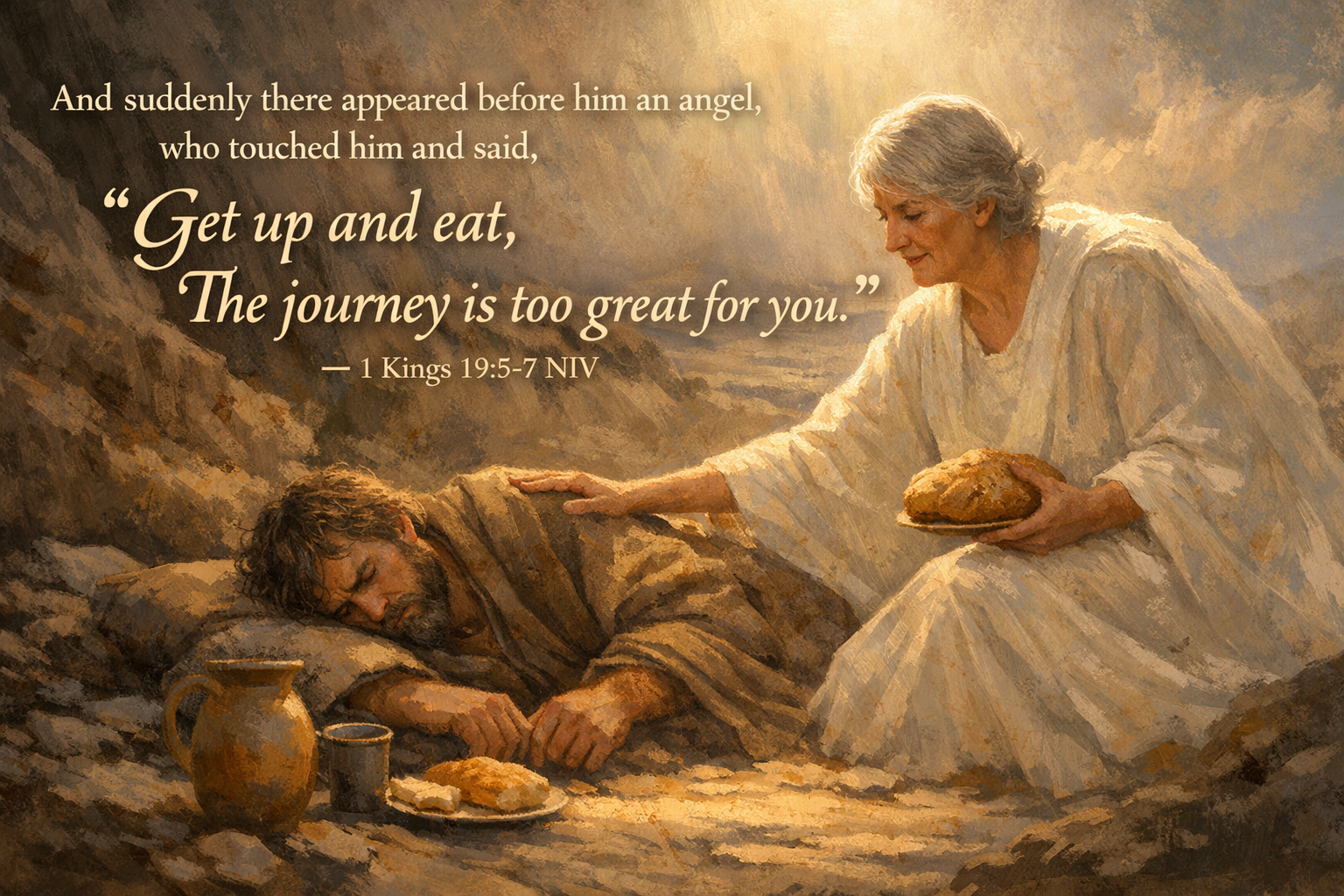
She knew things she should not have known.
That is how it starts with the gray-haired miracles. Not with fire. Not with a voice from the sky. With a calm, older person who appears without explanation in the right place at the right moment — and demonstrates a knowledge of your specific situation that they have no normal way of possessing.
My family has experienced this more than once. Others I have spoken with have their own versions. The details vary. The structure is always the same.
I call them the gray-haired miracles because that is how they most commonly appear in the accounts I have collected. Not the flaming chariots of Elisha’s vision. Something far quieter. Far more human-looking. And, arguably, more unsettling — because the most powerful encounters with the divine are often the ones that require no special effects at all.
The Pattern: Identifying the Consistent Structure
Across the accounts I have gathered — from families in medical crises, from people at the end of their resources, from individuals at the precise moment of a decision that would change everything — the pattern is remarkably consistent.
The person appears without a clear origin story. They are not introduced by another person present. They simply arrive. Often they sit down without being invited. They speak directly to the specific situation — not in generalities, but with precise relevance to the exact problem at hand. The help they provide is either informational (they know something specific that reorients the situation), physical (they do something that no one else present had the capacity to do), or emotional (they provide a quality of peace that is disproportionate to their apparent status as a stranger).
Then they are gone. Not after a warm goodbye and an exchange of contact information. Gone. Often while the person they helped has their eyes turned briefly away. Attempts to locate them afterward consistently fail. Staff who should have seen them have no memory of them. Security footage occasionally shows nothing.
That last detail is the one that makes the skin prickle.
The Theology: Three Possible Frameworks
When confronted with this pattern of experience, there are three theological frameworks available.
The first is purely naturalistic: the strangers were ordinary people whose timing was fortunate and whose specific knowledge was explainable by factors we simply failed to identify. The appearance of significance was a cognitive pattern imposed on random events by people under stress. This framework is intellectually coherent. It also fails to account for the security footage anomalies, the consistent failure to locate identifiable individuals, and the specific informational accuracy that goes beyond what any randomly well-meaning stranger should possess.
The second is providential human: the strangers were ordinary people who were directed by God — consciously or unconsciously — to be in a specific place at a specific time. Their departure was natural but fast. Their knowledge was given to them by the Holy Spirit in the moment, the way Jesus promised the Spirit would give His disciples words when they needed them (Luke 12:11–12). This framework is fully biblical and requires no supernatural being in human form — only the active direction of willing human agents by a sovereign God.
The third is angelic: the strangers were malak — messengers dispatched by God in human form, as per Hebrews 13:2 and the pattern of angelic appearances throughout Scripture. Their departure was not natural. Their specific knowledge was not given to them in the moment. They were dispatched with it. This framework accounts for every observed anomaly and is directly supported by biblical precedent.
Scripture does not require us to choose definitively between frameworks two and three in any specific case. What it does require is that we refuse framework one when the evidence does not support it.
Elijah and the Angel: The Most Precise Parallel
1 Kings 19 is the closest biblical parallel to the modern gray-haired miracle accounts. Elijah was alone, exhausted, and asking God to let him die. He had not prayed for food or help. He had not asked for an angelic visitation.
The angel appeared without announcement. Touched him. Told him to get up and eat. Food and water were already prepared. The angel let him sleep again, then returned a second time — ‘the angel of the Lord came back a second time’ — with the same practical provision and a single sentence that addressed the situation precisely: ‘Get up and eat, for the journey is too great for you.’
No theological lecture. No rebuke for the death wish. No extended comfort session. Specific, practical, precisely calibrated help — then gone.
That is the structure. That is the template. The gray-haired miracles operate on the same architecture.
What the Gray-Haired Miracles Are Not
They are not evidence of a particular person’s spiritual status. The encounters happen to people across the entire spectrum of faith maturity — from deeply formed believers to people who would not describe themselves as religious at all. God’s mercy is not distributed according to theological sophistication.
They are not always angelic. Some of them are almost certainly the providential deployment of ordinary people who were obedient to an impression they received in the moment. The important thing is not categorizing the agent. It is recognizing the One who sent them.
They are not something to be sought. The pursuit of unusual experiences as a form of spiritual validation is a documented hazard in Christian spirituality. The person who builds their faith on the accumulation of signs has built it on something that will eventually go quiet. Hebrews 13:2 commands hospitality to strangers — not the hunting of angelic experiences.
What They Are Evidence Of
The gray-haired miracles are evidence of what Psalm 34:18 and Isaiah 57:15 both describe: a God who is specifically attentive to the broken and the low. ‘The Lord is close to the brokenhearted’ is not a metaphor. It is a statement about the specific operational focus of divine attention.
When a family is at the absolute end of their human resources — when medicine has done what it can, when the waiting room is as far as you can go, when the fear is larger than your ability to manage it — that is precisely the condition that seems to trigger the gray-haired miracles. Not because God is absent until the crisis reaches a threshold. But because the crisis is the moment when the normal noise of self-sufficiency goes quiet enough for the presence that was always there to become detectable.
Reflection Questions
1. Have you experienced a gray-haired miracle — an encounter with a stranger at a crisis moment that seemed too precise to be accidental? What framework have you used to account for it?
2. Why do you think the gray-haired miracles most commonly appear in the specific form of an older, calm, unhurried stranger rather than something more overtly supernatural?
3. What does it say about God’s character that His most intimate interventions often look completely ordinary from the outside?
Paul R. Schmidt writes on faith, divine intervention, and Christian survival fiction at myfaithtales.com. The Good Ole Joe character in the Logan Murdock Trilogy is drawn directly from the gray-haired miracles his family experienced.